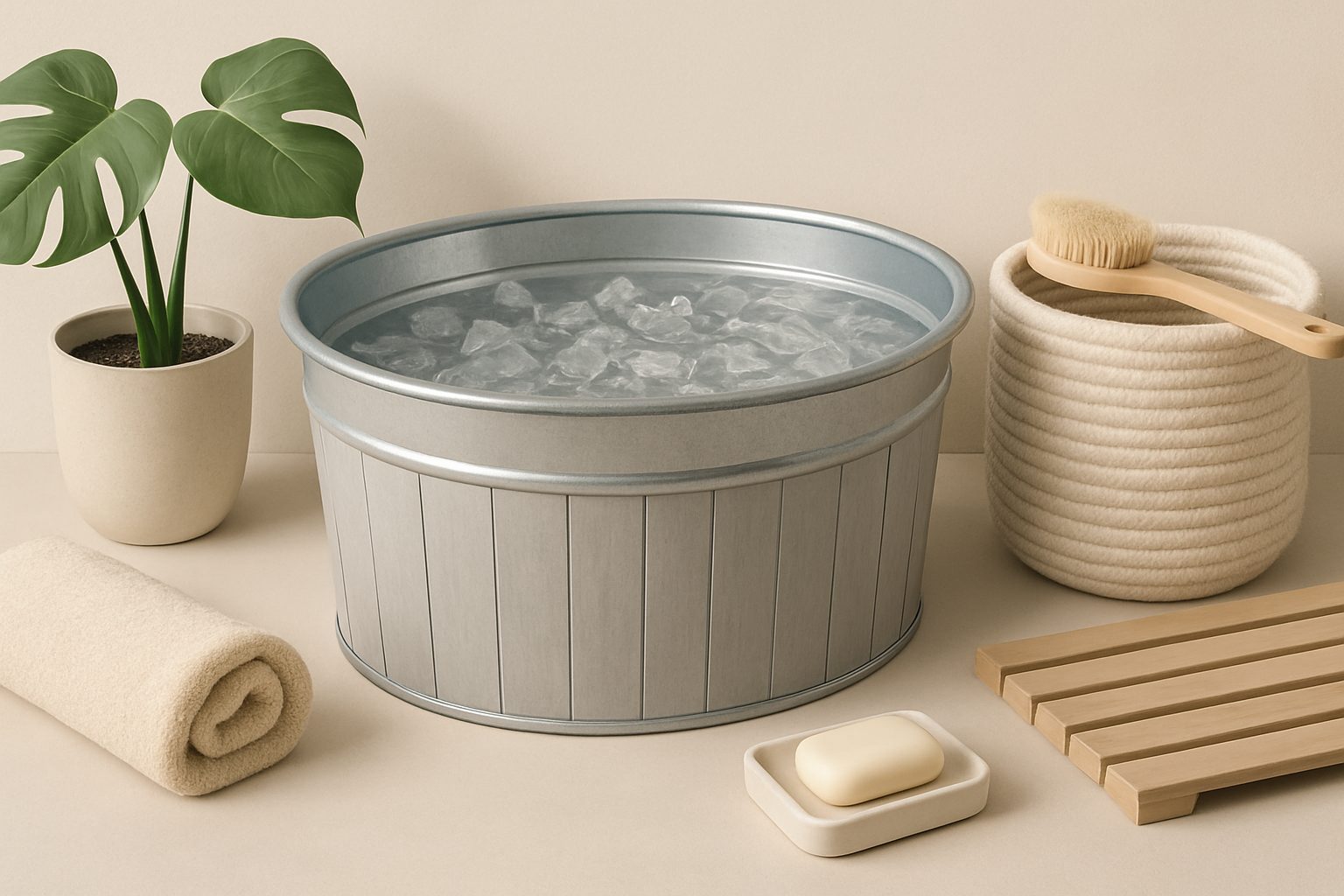
How Often Should You Cold Plunge? Weekly Protocols for UK Beginners & Athletes
Cold plunging has moved from fringe biohacking territory into mainstream wellness routines across the UK. But one question dominates: how often should you actually be doing this? The answer depends on your experience level, fitness goals, and how your body responds. There's no universal protocol—just evidence-based ranges that let you find what works.
Beginner Protocol: Building Tolerance (Weeks 1-4)
If you're new to cold water immersion, start conservatively. Your nervous system needs time to adapt.
Recommended frequency: 2-3 times per week, never on consecutive days.
Start with water around 10-15°C and keep sessions to 1-3 minutes. Most UK tap water runs 8-12°C in winter, so if you're using a garden tub initially, you're in the ballpark. The temptation is to do it daily—results feel good—but recovery matters more at this stage than frequency.
Take at least one full day between sessions. Your body releases a stress hormone response (cortisol) during cold exposure, and adaptation requires rest. Going every day without building up tolerance properly can exhaust your system rather than strengthen it. You'll likely feel worse: sluggish, irritable, struggling to sleep.
After 4 weeks of consistent 2-3x weekly sessions, you'll notice your body handles the shock better. Your breathing becomes calmer. The session feels less chaotic.
Intermediate Protocol: Consistency Over Frequency (Months 2-6)
Once you're comfortable with 2-3 weekly sessions, the question becomes: should you increase?
Recommended frequency: 3-4 times per week.
This is where most people find their sweet spot. You're getting consistent adaptation signalling without overloading recovery. Many who've settled into this rhythm report stable mood improvements, better sleep, and noticeable recovery benefits between gym sessions.
Bump water temperature down slightly if you're ready—aiming for 5-10°C—but keep duration the same or slightly longer. Three minutes at true cold (5-8°C) hits differently than five minutes at 12°C. The intensity matters more than duration once you're adapted.
This is also where you might consider your specific goal. Are you doing this for recovery, mental resilience, or general wellness? That shapes how you structure sessions.
Athlete & Recovery-Focused Protocol
If you're using cold plunging specifically for post-workout recovery (common in rugby, running, strength training), timing and frequency work together differently.
Recommended frequency: 4-5 times per week, paired with training days.
The evidence suggests cold water immersion works best within 15 minutes of intense exercise, particularly strength or high-intensity training. Sessions run 2-5 minutes at 8-15°C depending on your adaptation. Many athletes do shorter, colder dips (2 minutes at 5°C) rather than longer warm ones.
The constraint: don't plunge on your hardest training days if you're chasing hypertrophy. Cold exposure suppresses muscle-building signals slightly in the hours after cold stress. Recovery athletes often skip it after leg day or sprint work, reserving plunges for lighter recovery days or moderate-intensity sessions.
If you're trained and want daily sessions, it's workable—but not on top of maximum intensity training every single day. Structure matters. A footballer might plunge on Tuesday (recovery day), skip Wednesday (match day), resume Thursday, then decide Friday based on soreness.
Mental Health & Wellness Protocol
Cold plunging for mood, stress resilience, or focus isn't about constant exposure—it's about consistent signal.
Recommended frequency: 3-4 times per week.
Research on mood-related benefits (dopamine release, reduced inflammation) suggests that three quality sessions weekly gives you the stimulus without diminishing returns. More isn't necessarily better here. In fact, overtraining this modality can trigger anxiety rather than calm.
Sessions usually run 1-3 minutes at 8-12°C. Warmer than athlete protocols, but the consistency is what drives adaptations.
Many UK practitioners report that Tuesday, Thursday, and Sunday works well with their week—never bunched together, something to look forward to.
Frequency Ceiling: When More Becomes Problematic
Beyond 5-6 sessions per week, you're in specialist territory. This isn't beginner-friendly, and the evidence for extra benefit is thin.
Signs you've overdone frequency:
- Persistent irritability or mood dips between sessions
- Difficulty sleeping despite being "tired"
- Elevated resting heart rate that doesn't drop
- Catching more colds or feeling run down
If you're experiencing any of these, cut back to 3-4x weekly for a few weeks. Your body might be spending more energy on recovery than gaining adaptation.
Water Temperature & Duration Trade-offs
Colder water at lower frequency can match moderate cold at higher frequency. This matters for planning:
- 5°C, 2 minutes, 3x weekly = substantial stimulus
- 12°C, 4 minutes, 4x weekly = similar adaptation signal, different feel
Both work. The first feels more intense and dramatic. The second feels more sustainable. Your adaptation will be broadly similar, though psychological factors matter—if the 5°C version makes you dread it, you won't stick to it.
Temperature consistency matters more than incremental optimization. Pick a water temperature you can sustain, keep it there for 4-6 weeks, then decide if you want to go colder.
Finding Your Rhythm
The honest answer: optimal frequency is 3-4 times per week for most people. That's where research clusters, where most practitioners report best results, and where you can sustain it long-term without burnout.
Start at 2-3x weekly, progress to 3-4x after a month, then hold steady for a few months before experimenting with daily or 5x weekly protocols. Your adaptation and recovery will tell you if you're in the right range—better sleep, stable mood, and continued improvements in whatever metric you care about (cold tolerance, workout recovery, mental clarity) all suggest your frequency is appropriate.
The common mistake is chasing frequency as a badge of honour rather than asking whether more sessions are actually serving your goal. They usually aren't.
More options
- Cold Plunge Tubs & Ice Bath Tanks (Amazon UK)
- Inflatable Cold Plunge & Ice Bath Inflatables (Amazon UK)
- Cold Water Chiller & Cooling Units (Amazon UK)
- Waterproof Thermometers & Cold Plunge Accessories (Amazon UK)
- Ice Bath Covers, Steps & Recovery Accessories (Amazon UK)